

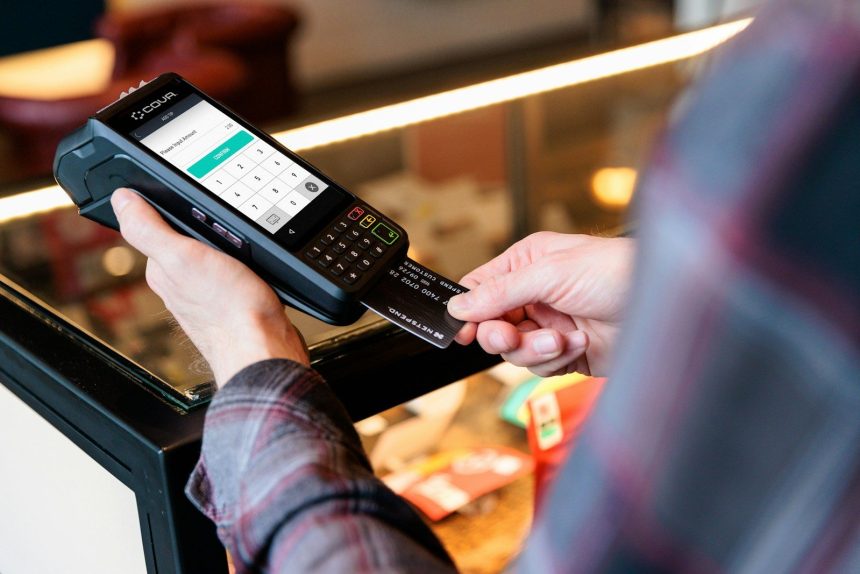
You’re standing at checkout, and the cashier offers 20 percent off if you sign up for the store card right now. It sounds like free money on a receipt you’re already holding. What that offer doesn’t mention is the interest rate waiting on the other side, and in 2026, store credit card interest rates are higher than they have been in almost two decades.
Why Store Credit Card Interest Rates Keep Climbing
Bankrate’s July 2026 survey of 110 store credit cards from the nation’s top 100 retailers found an average APR of 30.14 percent, the second-highest rate recorded since Bankrate began tracking retail cards in 2008. Store-only cards, which work at a single retailer, averaged even higher at 31.64 percent, while co-branded cards carrying a Visa or Mastercard logo averaged 28.65 percent. Ted Rossman, Bankrate’s senior industry analyst, said issuers justify the gap because store cards are easier to qualify for and delinquencies on them have increased.
Easier approval comes with a steeper price attached, whether or not a cardholder ever misses a payment. The average general-purpose credit card charged 20.12 percent over the same period, which means a typical store card now costs roughly one and a half times more to carry a balance than the card already sitting in most wallets.
Which Store Cards Charge the Most Right Now
Twelve retailers tied for the highest rate Bankrate found, all charging 35.99 percent APR: Academy Sports and Outdoors, Burlington, Michaels, Petco, Saks, Victoria’s Secret, and the jewelry chains Banter, Jared, Kay, Sterling, and Zales. Some of the sharpest jumps came at jewelry and department store chains. Saks’ card rose from 29.24 percent to 35.99 percent over the past year, and Victoria’s Secret’s card climbed from 32.24 percent to that same ceiling.
A few cards still sit well below the pack, proof that not every retail card is priced the same way. The Amazon Secured Card charges 10 percent, the Military Star Card charges 14.49 percent, and Circle K’s Holiday Smart Savings card charges 16.20 percent. Checking a card’s actual rate before applying takes less time than the checkout line itself.
If you already carry a balance on a card with a rate near this range, our guide on how to pay off credit card debt breaks down the debt snowball and debt avalanche methods, along with how to ask an issuer for a lower rate before assuming nothing can change.
The Deferred Interest Trap Behind Big Purchases
Many store cards, especially at furniture, electronics, and home improvement retailers, advertise no interest if paid in full promotions that run six, twelve, or even twenty-four months. The catch sits in the word deferred. If any balance remains when the promotional period ends, even a few dollars, the issuer can charge interest back to the original purchase date rather than just on what is left.
A Consumer Financial Protection Bureau analysis of the retail credit card industry modeled exactly this scenario using a $4,500 furniture purchase carrying a 31.99 percent APR. Leaving just $180 unpaid when the promotional period ended triggered $1,439.55 in retroactive interest charges, nearly eight times the size of the remaining balance itself.
Why Retailers Keep Pushing These Cards Anyway
Store cards stay profitable well beyond the interest they collect. Four banks, Synchrony Financial, Citibank, Capital One, and Bread Financial, issue more than 80 percent of all retail credit cards on behalf of retailers, and card programs accounted for roughly 36 percent of net income at some major retailers between 2018 and 2023 once financing revenue is counted separately from merchandise sales.
Private label cards also generate late fees disproportionate to the number of accounts. They make up about a third of retail card accounts industry-wide but produce 46 percent of all late-fee revenue, largely because most store cards apply one fixed, higher rate to nearly every approved applicant instead of adjusting by credit tier the way general-purpose cards typically do.
Smarter Ways to Get the Discount Without the Long-Term Cost
If a 20 percent discount is worth having, plan to pay the full balance before the first statement closes rather than waiting for a promotional deadline months away. Ask whether the retailer offers a similar discount for joining a free loyalty program or using a debit card instead, since several chains offer comparable perks without opening a new credit line.
Skip applying for a store card during a large purchase decision made under time pressure at the register. A new account and a hard credit inquiry both affect your credit report, and that decision deserves the same few minutes of thought you would give any other loan offer.
Carrying a store card balance rarely happens in isolation. If missed or late payments have already started piling up across multiple accounts, our breakdown of credit card delinquency covers what happens after a payment falls behind and how to get ahead of it before an account charges off.
Frequently Asked Questions About Store Credit Card Interest Rates
Is a Store Credit Card Ever Worth Opening?
It can be, if you plan to pay the full balance every statement and the discount genuinely offsets what you would have spent anyway. The math turns against you the moment a balance carries over to a second month at a rate above 30 percent.
Why Are Store Card Interest Rates So Much Higher Than Regular Credit Cards?
Store cards approve a wider range of applicants and charge most of them the same fixed, higher rate rather than pricing by credit tier. Issuers say the higher approval rate and elevated delinquencies on these accounts justify the cost.
What Happens If I Do Not Pay Off a Deferred Interest Promotion in Time?
The issuer can charge interest back to the original purchase date on the entire amount financed, not just the outstanding balance. A small remaining balance can trigger a disproportionately large interest charge.
Do Store Cards Affect My Credit Score Differently Than Other Cards?
Not structurally, but a high limit-to-balance ratio on a card with a steep rate can make a balance grow faster than you expect, which raises your credit utilization and can pull your score down if payments slip.
Final Thoughts
A discount at checkout feels immediate. An interest rate above 30 percent works quietly in the background for months afterward, which is exactly why it is easy to miss until a statement arrives larger than expected. Before you sign up at the register again, ask what the actual APR is, and hold that number next to the size of the discount you are being offered. Most of the time, paying full price on your existing card will cost less than carrying any balance on a new one.
Photo by Cova Software: Unsplash