

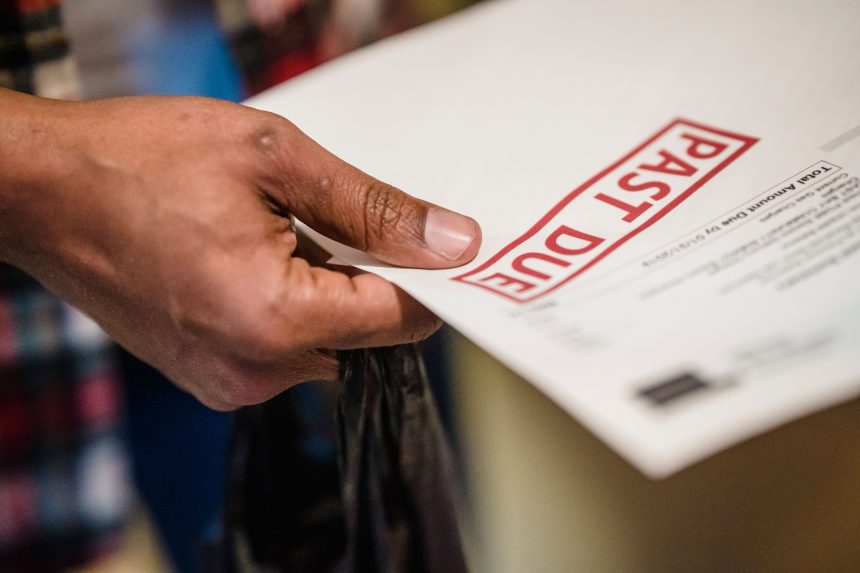
A hospital bill you meant to deal with later just turned into a court summons. That jump from unpaid invoice to legal notice feels sudden, but it is happening to more people than ever this year. Debt collection lawsuits, many of them tied to medical bills, are climbing toward levels not seen since before the pandemic, and most people who get sued never show up to fight it. Here is what is actually driving the surge, what happens after you are served, and how to protect your paycheck and your bank account if a medical debt lawsuit lands on your doorstep.
Why Medical Debt Lawsuits Are Climbing in 2026
Debt collection filings hit 4.7 million cases in 2022 and kept rising through 2023 and 2024, according to a Pew Charitable Trusts analysis of state court data, with several states now surpassing their post-2008 recession peaks. Utah is on track to break its own record this year, and Alabama has already reached its highest filing level ever recorded. Medical debt sits alongside credit card and bank debt as one of the most common reasons households end up in court, and third-party debt buyers are a big part of why. One debt buyer, LVNV Funding, increased its case filings by 350% between 2019 and 2024 and was responsible for nearly a quarter of all filings in the states Pew tracked closely. In Virginia alone, hospitals and physician groups have filed more than one million lawsuits against patients since 2010.
Medical debt already shapes your credit profile long before a lawsuit enters the picture. Our breakdown of whether medical debt still shows up on your credit report covers what current bureau policy protects and what still slips through, which matters here because a court judgment can follow you even after the original bill disappears from your report.
What Actually Happens After You Are Served
Getting sued over a medical bill starts with a summons and complaint, a formal notice that a case has been filed and that you have a set window, usually 20 to 30 days depending on your state, to file a written response. Miss that deadline and the case does not just sit there. The court typically enters a default judgment automatically, which means the debt collector wins without ever having to prove the bill is accurate or that you actually owe it. From there, a judgment creditor can move to garnish your wages or freeze funds in your bank account, depending on what your state allows.
That outcome is common because so few people respond. A Michigan resident recently had 25% of her wages garnished for more than eight weeks over a five-year-old utility debt, a pattern that plays out just as often with medical bills once a judgment is entered. Responding to the summons, even with a simple written answer that disputes the amount or asks for proof of the debt, stops the automatic default and forces the collector to actually prove its case.
Wage Garnishment for Medical Debt Is Legal in Most States
Unlike federal student loans, which carry specific consumer protections, wage garnishment for an unpaid medical bill is legal in all but a handful of states once a creditor has a court judgment in hand. In Colorado alone, an estimated 14,000 medical debt cases result in court-approved wage garnishment every year, a pattern documented by KFF Health News across rural hospitals, physician groups, and even public ambulance services. That has pushed eight states, including Colorado, Florida, Indiana, Michigan, and Ohio, to introduce legislation this year to ban or sharply limit garnishment for medical debt, following Arizona’s lead after it passed similar protections in 2022.
Only about a third of states currently guarantee any automatic protection for a bank account tied to a judgment, and Virginia just became the 14th state to add one, shielding the first $1,000 in an account from seizure. Outside of states with that kind of rule, a judgment creditor can freeze an entire account balance, including money meant for rent or groceries, until the debt is satisfied or you successfully claim an exemption in court.
Most people facing a medical debt lawsuit never get legal help before it reaches this point. A Pew Charitable Trusts review of court data found that consumers are represented by an attorney in fewer than 10% of debt collection cases nationwide, and in some jurisdictions that figure drops below 1%.
How to Protect Yourself If You Are Sued Over a Medical Bill
Ignoring the summons is the most expensive mistake you can make, since it triggers an automatic default judgment. File a written response by the deadline listed on the paperwork, even a short one, and request an itemized bill from the hospital or debt buyer to confirm the amount is accurate and actually yours. Many hospitals are required to offer financial assistance or charity care under IRS rules for nonprofit facilities, and asking about that program, even after a bill has gone to collections, can sometimes reduce or eliminate what you owe retroactively.
Once you are in front of a judge, or before the hearing if the collector is willing, ask about a payment plan capped at an amount you can actually sustain rather than accepting whatever the collector first proposes. Free legal aid clinics in many counties specifically handle debt collection defense and can review whether the debt buyer even has the paperwork to prove you owe the amount claimed, which is a common weak point in these cases.
When to Get Help Before It Reaches Court
A nonprofit credit counselor through the National Foundation for Credit Counseling can review medical bills alongside every other balance you are carrying and flag which ones are worth disputing before a collector files anything. Calling the hospital’s billing office directly, before a bill is sold to a third-party debt buyer, is often the easiest point to negotiate a reduction or an interest-free payment plan, since providers generally recover less once a case goes to an outside collector or a lawsuit.
If medical bills are one of several balances pushing your finances past what feels manageable, it helps to understand your options before a courtroom becomes the next step. Our guide to rising bankruptcy filings in 2026 explains how Chapter 7 and Chapter 13 differ and what each protects, which is worth understanding before a judgment forces the decision for you.
Final Thoughts
A summons over a medical bill can feel like proof that things have spiraled out of control, but the numbers say otherwise. Most people sued over debt never respond, and that silence is what turns an unpaid bill into a wage garnishment. Read the paperwork, answer it by the deadline, and ask the hospital about financial assistance before assuming the amount on the notice is final. That response is the single step most likely to change how this ends.
Photo by Nicola Barts : Pexels